
A viral meme is a piece of online culture that spreads because it scores well on three traits Richard Dawkins listed in 1976: fidelity, fecundity and longevity. In practice, humor, remixability and a shared in-joke do most of the work.
The word comes from biology, not the internet, and the modern meme inherited its logic of copying, mutation and selection from that origin.
Where the idea of a viral meme comes from
The term meme was introduced by Richard Dawkins in his 1976 book The Selfish Gene to describe a conceptual unit of cultural transmission, analogous to the gene in biology. Dawkins argued that evolution did not depend on a particular chemical basis, only on a self-replicating unit of transmission. For genes, that unit is DNA. For culture, he proposed tunes, catchphrases and fashions.
The idea was not entirely new. Maurice Maeterlinck used the term mneme in The Life of the White Ant in 1926, with parallels to Dawkins’s concept. A field of study called memetics then arose in the 1990s to explore how memes move through populations in terms of an evolutionary model. Critics in the social sciences questioned whether culture can be sorted into discrete units at all, so memetics stayed contested even as the word escaped into everyday speech.
Pre-internet examples show the pattern clearly. The graffito “Kilroy was here” became popular in the 1940s and existed under various names in different countries, which illustrates how a meme can be modified through replication. Each local version kept the core drawing but adapted the wording, exactly the copy-and-mutate loop that later defined online humor.
The three traits that predict spread
Scholars Michele Knobel and Colin Lankshear examined how Dawkins’s three characteristics of successful traditional memes apply to internet culture: fidelity, fecundity and longevity. Each one maps onto a practical question about any piece of content.
- Fidelity asks whether the idea survives being copied. A short caption on a recognizable photo transmits cleanly; a long, nuanced argument does not.
- Fecundity is the ability to spread. It is promoted by humor, intertextuality and the juxtaposition of seemingly incongruous elements.
- Longevity is how long the idea stays in circulation before attention moves on.
Fecundity is the trait most visible to a casual observer. Wikipedia’s survey of the research cites the comically translated video game line “All your base are belong to us” as an example of humor driving spread, the pop-culture-referencing renditions of the “Star Wars Kid” video as intertextuality, and the “Bert is Evil” meme as a case of incongruous juxtaposition. None of those required a marketing budget; each gave viewers something to riff on.
Why remixing beats polish
A viral meme is rarely a finished product. Its defining feature is that strangers can alter it with minimal effort. The Wikipedia entry on internet memes lists their key characteristics as a tendency to be parodied, use of intertextuality, viral dissemination and continual evolution. Parody and evolution sit in that list next to virality because the three reinforce each other: every remix is a new transmission.
The simplest remix is mimicry, where individuals recreate the original in a different setting. The viral video “Charlie Bit My Finger” was replicated this way by different families, each producing a version that was recognizably the same but personally theirs. More elaborate remixes change the caption, the image or the whole context, so the template becomes a blank form that anyone can fill.
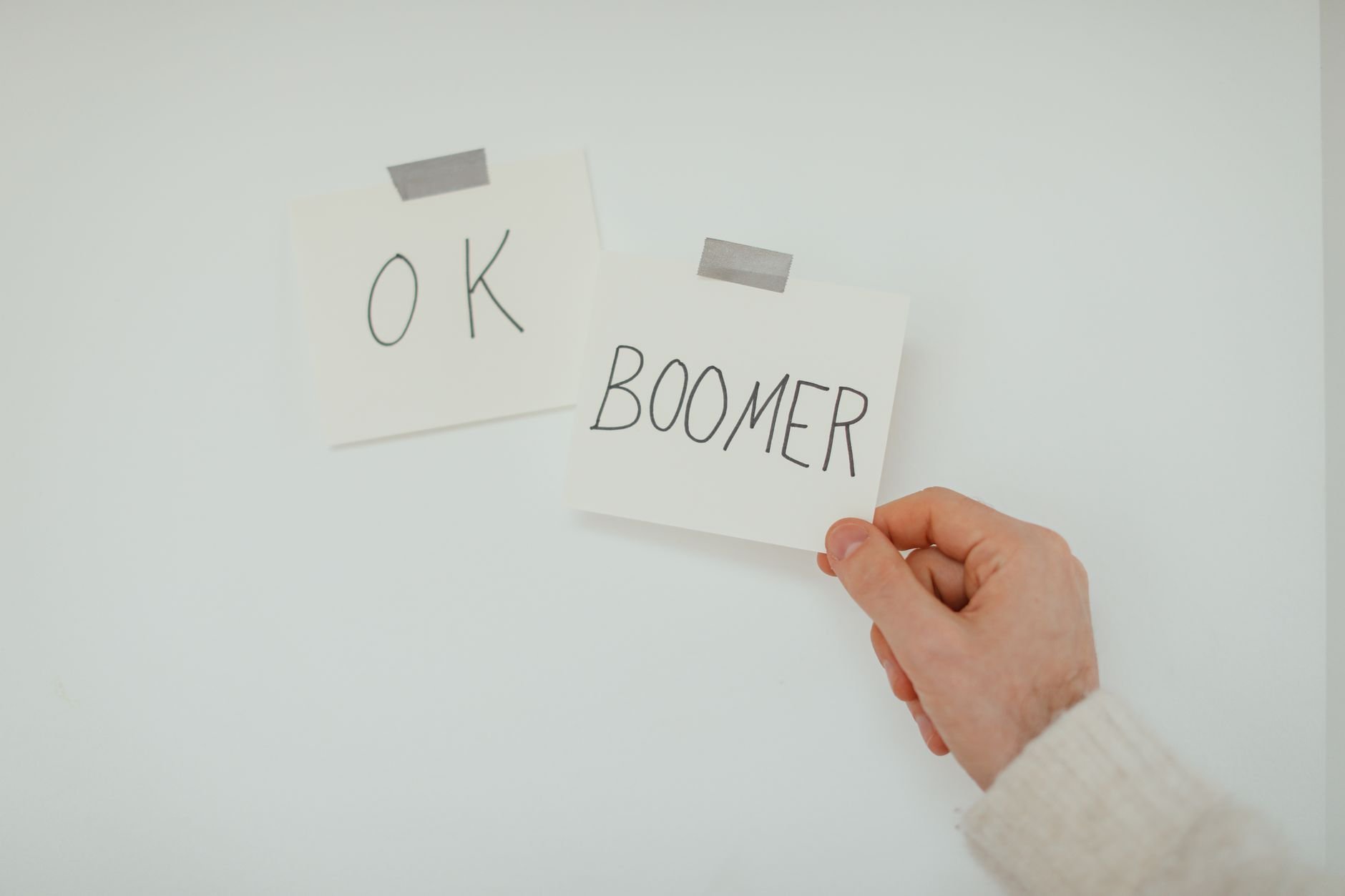
This is why the image macro became the signature format of the mid-and-late 2000s. The lolcat, a style especially popular in that period, fixed the image-plus-caption structure so that the only thing left to invent was the joke. Low production cost raises the number of people able to participate, and participation is what carries a template forward.
How communities shape what spreads
Memes seldom go viral in a vacuum. They usually begin inside a subculture, where an in-joke fosters a sense of collective identity within the group. Others then break out and achieve widespread cultural relevance with audiences outside the originating community, which is the moment most people would call the meme “viral.”
The Wikipedia entry reports researcher Miltner’s explanation that as content moves through different communities, it is reinterpreted to suit the specific needs and desires of those communities, often diverging from the creator’s original intent. A format that meant one thing on a niche forum can mean something quite different once it reaches a mainstream feed.
Platform culture matters here. A reddit meme typically gets its first test in a community of strangers who vote it up or ignore it, a rapid selection pressure that filters weak jokes before they travel further. Other platforms apply their own filters, such as short-video remix tools or group chats, but the principle is the same: a meme survives only if enough people judge it worth passing on.
The epidemic comparison and its limits
The word “viral” is borrowed from epidemiology, and the comparison is more than a figure of speech. The Wikipedia article on internet memes notes that memes spread virally in a manner similar to the SIR (Susceptible-Infectious-Recovered) model used to describe disease outbreaks. In that picture, people who have not seen a meme are susceptible, people actively sharing it are infectious, and people who have grown tired of it are recovered.
The model explains the typical life cycle: a slow start, a steep peak and a decline once most of the audience has either shared the meme or lost interest. It also explains why saturation kills a joke. When nearly everyone has seen a format, the pool of susceptible people shrinks, and the format moves from fresh to stale.
The analogy has limits. Disease does not need to be funny, while a meme must give the carrier a reason to share it. Wikipedia’s meme entry also records that memes that replicate most effectively enjoy more success, and that a few may replicate effectively even when they prove detrimental to the welfare of their hosts. Whether a given meme does anything for the people sharing it, beyond amusement or belonging, is a separate question from whether it spreads.
What this means when you see a meme take off
When a new format surges, a handful of questions usually explain it. Is the core idea simple enough to copy accurately? Does it contain a joke, a reference or an odd pairing that invites variation? Is there an existing community ready to adopt it and make it a marker of identity? A meme that answers yes to all three has the traits Dawkins described, adapted to feeds instead of folklore.
The same checklist predicts decline. Once a template is fully explored, nothing new is left to add, and attention drifts. Wikipedia notes a broader trend that memes once considered valuable cultural artifacts meant to endure now often convey trivial rather than meaningful ideas, which is another way of saying that short lifespans are normal.
Frequently asked questions
Who invented the word meme?
Richard Dawkins coined it in his 1976 book The Selfish Gene as a name for a unit of cultural transmission, modeled on the gene.
What are the three traits of a successful meme?
Dawkins’s three characteristics are fidelity, fecundity and longevity, which Michele Knobel and Colin Lankshear applied to internet memes in their research.
Why do memes spread like a virus?
Wikipedia reports that memes spread in a manner similar to the SIR (Susceptible-Infectious-Recovered) model used for epidemics, with a rise, a peak and a decline as audiences tire.
Did memes exist before the internet?
Yes. The “Kilroy was here” graffito became popular in the 1940s and was modified under various names in different countries.