4chan culture is the anonymous, irreverent style of an imageboard launched in October 2003, which seeded memes, pranks and political movements that spread across the wider web.
This page gives a plain history of that influence, as one thread in internet culture as a whole.
How did 4chan start?
The site was launched as 4chan.net on October 1, 2003, by Christopher Poole, a 15-year-old student from New York City who posted under the handle “moot”. It began as an unofficial English-language counterpart to the Japanese imageboard Futaba Channel, also known as 2chan, and its first boards were devoted to anime.
The imageboard format matters here. Users share pictures and start threaded discussions, and there is no registration for ordinary users. Older threads are pushed off the board by newer ones, so nothing is meant to last. That design shaped almost everything the community later produced.
Growth was fast. The site went on to become one of the busiest imageboards on the web. Money, though, was a constant problem: the site consumed a large amount of bandwidth, and advertisers avoided it because of the explicit content it hosted.
That tension never went away. A free service with heavy traffic and few willing sponsors had to lean on donations, paid passes and a small volunteer staff, which kept the operation lean and the rules loose. It also meant the site’s character was set less by a business plan than by whoever happened to be posting that night.
The Japanese parent matters for another reason. Futaba Channel had already established the conventions that 4chan borrowed: image-first threads, short-lived topics and a habit of treating the whole board as a single, shifting conversation. The English-language version carried those habits into a different language and a different set of in-jokes.
Anonymity and the culture it produced
Most posts on 4chan carry the default name “Anonymous”, and the 2011 figure given by Poole was approximately 20 volunteer moderators for the whole site. Without usernames, post histories or follower counts, status cannot be built up. A post is judged only on what it says, and the crowd can be blunt about it.
The “Random” board, known as /b/, has few rules and became the main engine of the site’s humor. In 2008 The Guardian summarized the community as “lunatic, juvenile […] brilliant, ridiculous and alarming”, a description that still fits a place where jokes, cruelty and invention sit side by side.
The contrast with other platforms is useful. Persistent identity and moderation by community norms define reddit culture, while invite-only servers and shared in-jokes between known friends define discord culture. 4chan sits at the opposite end, where nobody is known and nothing is archived by default.
Memes that began on the imageboard
Wikipedia describes the site as a hub of Western internet subculture whose community was influential in the formation and popularization of lolcats, Rickrolling, rage comics, wojaks and Pepe the Frog. A clear example is the rickroll.
The rickroll grew out of “duckrolling”, a bait-and-switch trick that was popular on 4chan in 2006. A link promised one thing and delivered a picture of a duck on wheels. The same logic carried over when, on 15 May 2007, a 4chan user posted a link that claimed to show a trailer for Grand Theft Auto IV and instead played Rick Astley’s “Never Gonna Give You Up”. Rickrolling originated on 15 May 2007, and it stayed popular long after 4chan stopped being its main home.
The pattern repeats across the decade: a rough image or phrase appears on a board, the crowd remixes it, and within months it shows up on larger sites where nobody remembers the origin.
Several features explain why the board worked as a meme factory. Threads move quickly, so a joke has to land immediately or vanish. Images need no translation, so a format can cross language barriers. And because nobody is credited, there is no incentive to protect a creation; anyone can edit, caption or reuse it, which is exactly how a single image becomes a template.
Pepe the Frog shows the downside of that openness. The character began as a comic figure, was adopted as a reaction image on the boards, and was later claimed by political groups, so the meaning of the picture shifted depending on who was posting it. Wojaks, a family of simple drawn faces, followed a similar path from a single sad drawing to a flexible set of characters used to caricature opinions.
The rickroll also shows how a niche joke becomes a mainstream one. Once the trick moved from the boards to general video sites, people with no connection to 4chan were using it on friends, in classrooms and at public events. The origin faded; the format stayed.
From pranks to politics
The same crowd that produced harmless pranks also produced harder-edged activity. The site is credited with giving rise to the hacktivist collective Anonymous, and in April 2009 an open poll run by Time magazine voted Poole the world’s most influential person of 2008, a result questioned because automated voting programs and ballot stuffing were used.
Politics grew more central over time. The /pol/ board was created in October 2011 as a rebranding of the news board /new/, which had been deleted earlier that year for a high volume of racist discussion. Public authorities, commentators and civil society groups have since reported far-right extremism on the site, and the board became a reference point in debates about how fringe online spaces feed mainstream politics.
Anonymous itself illustrates the shift. The name came from the default poster label, and it turned into shorthand for loosely organized online campaigns with no leaders or membership list. Whether a campaign counted as one of its own depended only on whether enough people joined, a structure that mirrored the imageboard’s lack of identity.
The Time poll is a smaller but telling episode. A crowd that can coordinate in hours can also tilt an online vote, and the 2009 result showed that the community treated large public contests as targets for pranks as much as for participation.
The lesson usually drawn is that the same features, anonymity and no memory, that make the humor inventive also remove any brake on harassment and extremism.
Where 4chan stands after 2023
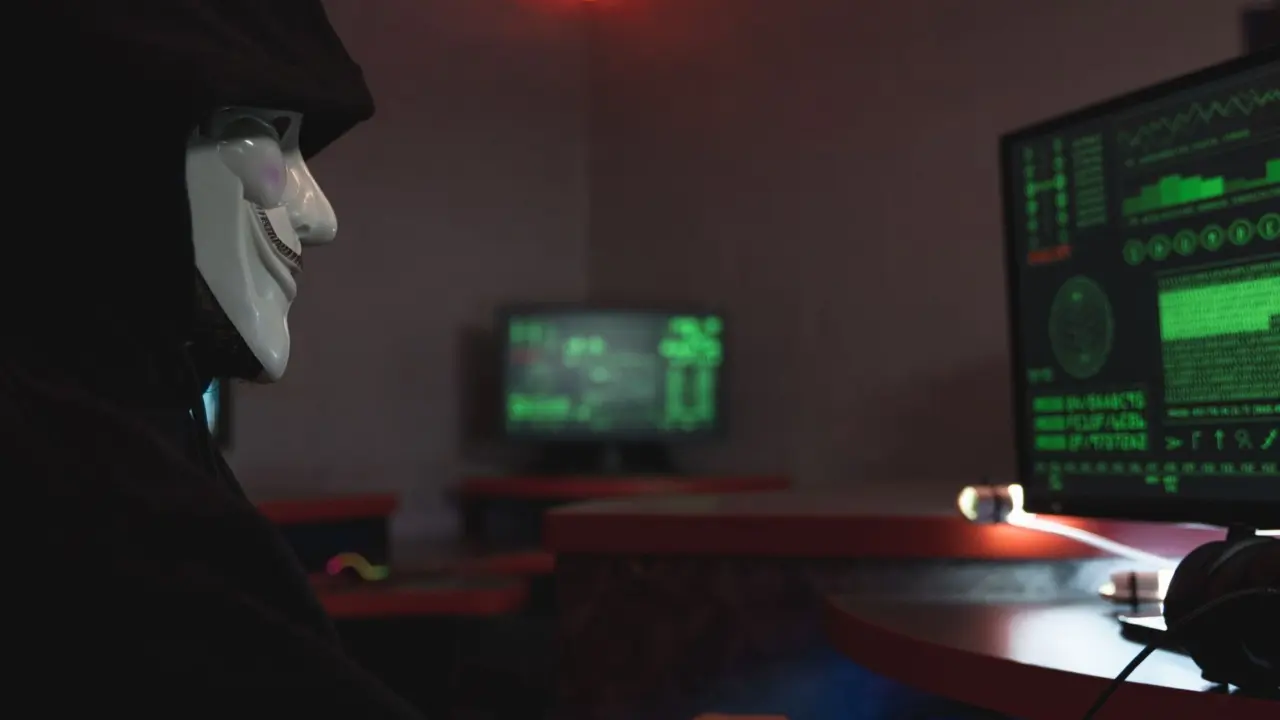
The site has often been attacked. On December 28, 2010, 4chan and other websites went down after a denial-of-service attack, and Poole joked on his blog about joining the ranks of MasterCard, Visa and PayPal. A more serious breach followed: on April 14, 2025, 4chan was hacked by an anonymous user who announced it on the rival imageboard soyjak.party.
The ownership and domain story has also shifted. Advertising blacklists led to a split into a separate 4channel domain, but all boards returned to 4chan.org in December 2023.
Those events, the outage in 2010 and the breach in 2025, show a site that is both durable and fragile. It has survived donation cutoffs, advertiser exits and repeated attacks, and each time the community has returned to the same boards under the same conventions.
Legacy is easier to see outside the site than inside it. Reaction images, ironic captions, bait-and-switch links and the habit of posting without a name now belong to general online humor, and people use them daily without knowing where they started. That diffusion is the clearest measure of the influence this history describes.
Its direct influence on meme production has shrunk as slower-moving platforms and short-video apps took over distribution. What remains is the template: anonymous, ephemeral posting that turns ordinary images into shared jokes at speed.
Frequently asked questions
Who created 4chan?
Christopher Poole, a 15-year-old from New York City who used the handle “moot”, launched it on October 1, 2003, according to Wikipedia’s history of the site.
Did 4chan invent the rickroll?
Rickrolling originated on 15 May 2007 with a 4chan user, and it grew out of the 2006 duckrolling prank, per Wikipedia’s Rickroll article.
Is 4chan still active?
Yes. It was hacked on April 14, 2025 and later returned, and its boards were consolidated back onto 4chan.org in December 2023, per Wikipedia.
Which memes are linked to 4chan?
Wikipedia lists lolcats, Rickrolling, rage comics, wojaks and Pepe the Frog among the memes the community helped form or popularize.